AI Content Automation System
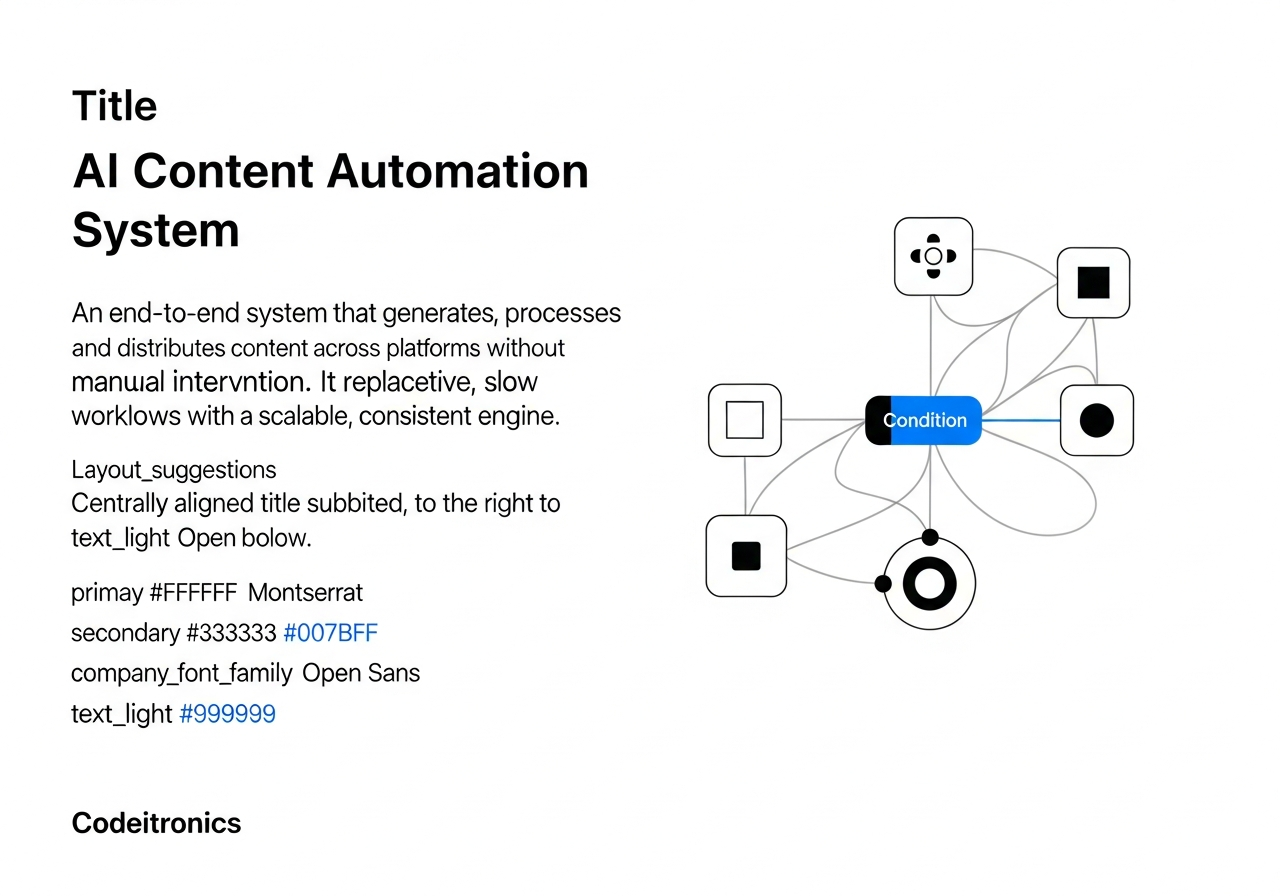
An end-to-end system that generates, processes, and distributes content across platforms without manual intervention. It replaces repetitive, slow workflows with a scalable, consistent engine.
Product Overview
Overview
This system automates the entire content lifecycle, from initial generation to final distribution. It is designed to eliminate manual, repetitive tasks and ensure consistent output across multiple channels.
Problem Statement
Content creation and distribution is often a bottleneck. Manual processes are slow, prone to inconsistency, and difficult to scale across different platforms like blogs, social media, and video channels.
Solution Architecture
We built a deterministic, AI-driven pipeline. The system uses workflow orchestration to chain together large language models (LLMs), media processing APIs, and platform-specific distribution triggers.
Core Components
- Workflow Orchestrator (n8n): The central nervous system. It defines the sequence of operations, handles errors, and manages data flow between services.
- Content Generation Layer: Integrates with multiple LLM providers via API. This layer is responsible for creating draft text for articles, social posts, and video scripts based on configured prompts and templates.
- Media Processing Engine: Connects to services for generating or editing images, synthesizing voiceovers, and compiling short-form video clips based on the text output.
- Storage & Asset Management (Google Drive): Acts as the central repository for all generated assets—text drafts, images, audio files, and final videos—providing version history and access control.
- Distribution Router: Contains the API integrations for various publishing platforms (e.g., WordPress, LinkedIn, YouTube). It formats the final content to platform specifications and handles the upload/post scheduling.
Technical Implementation
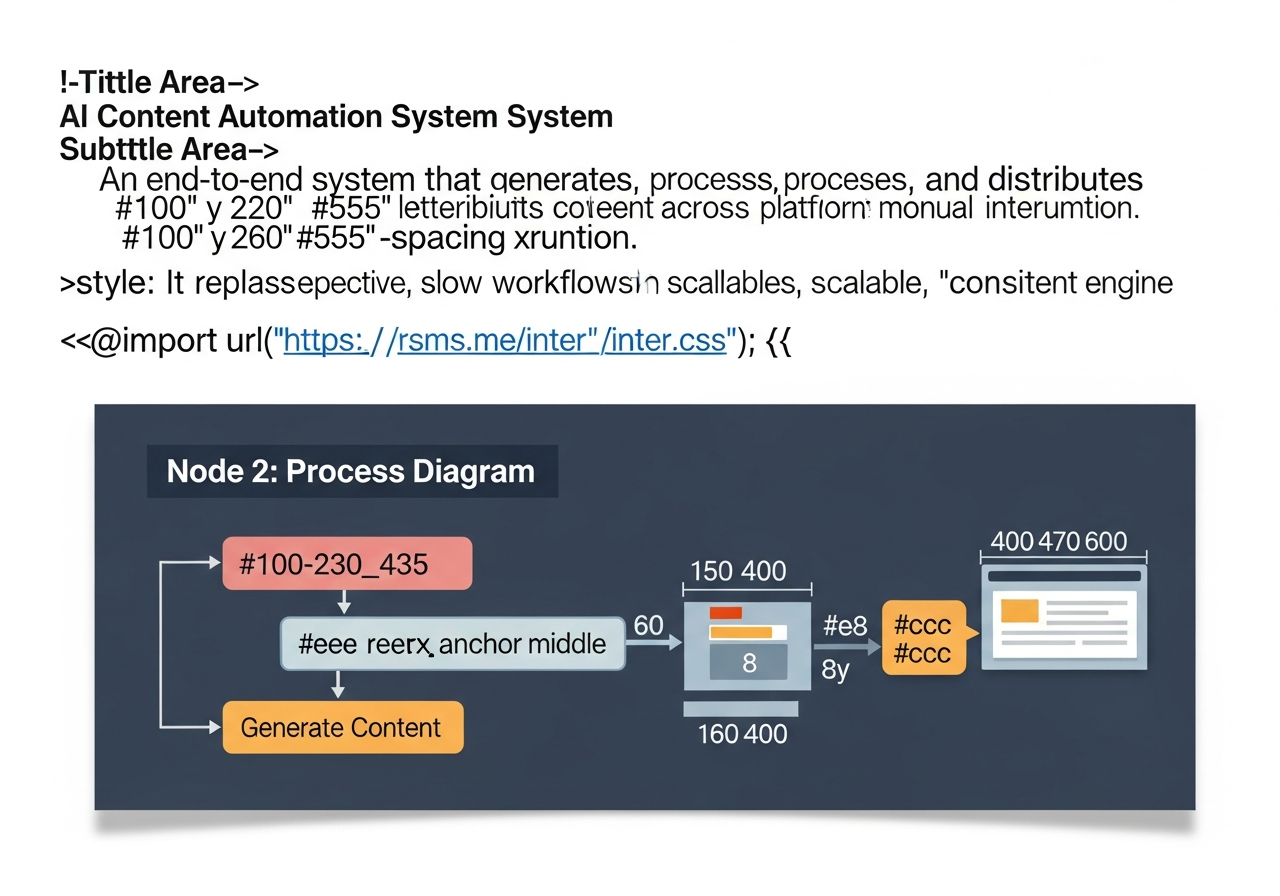
A typical workflow execution follows these steps:
1. Trigger (Time-based / CMS update) -> n8n
2. n8n -> LLM API: Generate blog post draft
3. n8n -> Image API: Create header image
4. n8n -> Google Drive: Save draft and image
5. n8n -> WordPress API: Publish formatted post
6. n8n -> Social Media APIs: Create and queue derived posts
All components are modular and communicate via REST APIs or dedicated connectors. The system is configured and monitored through the n8n interface, allowing for easy debugging and modification of workflows without deep code changes.
Impact & Outcomes
- Reduced Manual Effort by 80%: Teams are freed from repetitive posting and formatting tasks.
- Consistent Multi-Platform Publishing: Ensures brand voice and messaging are uniform across all chosen channels.
- Scalable Content Engine: The pipeline can be extended to new content types or platforms by adding new workflow nodes, enabling content volume to grow without linear increases in team size.
Core Features
End-to-end automated content pipeline
Multi-platform distribution (blog
social
video)
Integrated AI generation & media processing
Centralized asset management in Google Drive
Configurable workflows via n8n interface